


 One 15-second video, one living room, and suddenly everyone wants the same thing.
There's a specific kind of modern mystery that plays out online every single week. A product nobody was talking about on Monday suddenly has a 200,000-person waitlist by Friday. A $25 kitchen gadget sells out nationwide because one teenager filmed it in her kitchen. A gadget that sat in obscurity for years gets rediscovered, and within days you can't scroll five posts without seeing it.
For decades, making a product famous required enormous budgets: TV commercials, celebrity endorsements, prime shelf space. Traditional advertising was a megaphone — the bigger your budget, the louder you could shout. But somewhere along the way, the megaphone got replaced by something far more interesting: a chain reaction. Today, a single 15-second phone video can clear store shelves overnight, without a single dollar of ad spend behind it.
It looks like magic. It isn't. Virality is one of the most studied phenomena in consumer psychology, and the products that catch fire online almost always press the same handful of psychological buttons — often without anyone planning to. Once you know what those buttons are, you'll never look at your "For You" page the same way again.
Here's the psychology behind why some products go viral, and why your brain can't help but hit "add to cart."
Virality Isn't Magic — It's Human Psychology on Autopilot
Before we get into the triggers, it helps to reframe what a "viral product" actually is. Nothing about the product itself changes when it goes viral. The candle that's been on the market since 2022 is the exact same candle in the video that got 40 million views last month.
What changes is context. Suddenly the product is being shown to you by a real person, in a real home, doing something you actually do in your own life. Psychologists call this the difference between interruption (a traditional ad) and identification (watching someone like you discover something). Interruption triggers skepticism. Identification triggers desire.
That's the foundation everything else is built on. And from there, five specific psychological triggers do the heavy lifting.
Trigger #1: Social Proof — Safety in Numbers
Humans are hardwired to look at what other people are doing before deciding what to do ourselves. Psychologists call this the informational social influence: when we're uncertain, we assume the crowd knows something we don't.
In prehistoric terms, if everyone in your tribe suddenly ran, you ran too — asking questions was a luxury. Your shopping brain still works this way, just with shopping carts instead of predators.
Online, social proof is everywhere and it's ruthlessly effective:
- View counts: "2.4 million people have watched this" reads as evidence, not entertainment.
- Comment sections: Thousands of "I bought this and I love it" comments act like a focus group you didn't have to pay for.
- "Sold out" badges: Scarcity plus crowd approval is a one-two punch of validation.
- Real photos from real buyers: Unpolished reviews carry more trust than any studio photography ever could.
The key insight: seeing thousands of real, unpaid people recommend an item creates instant trust that money literally cannot buy. That's why brands can't fake it easily — and why genuinely good products have such a structural advantage.
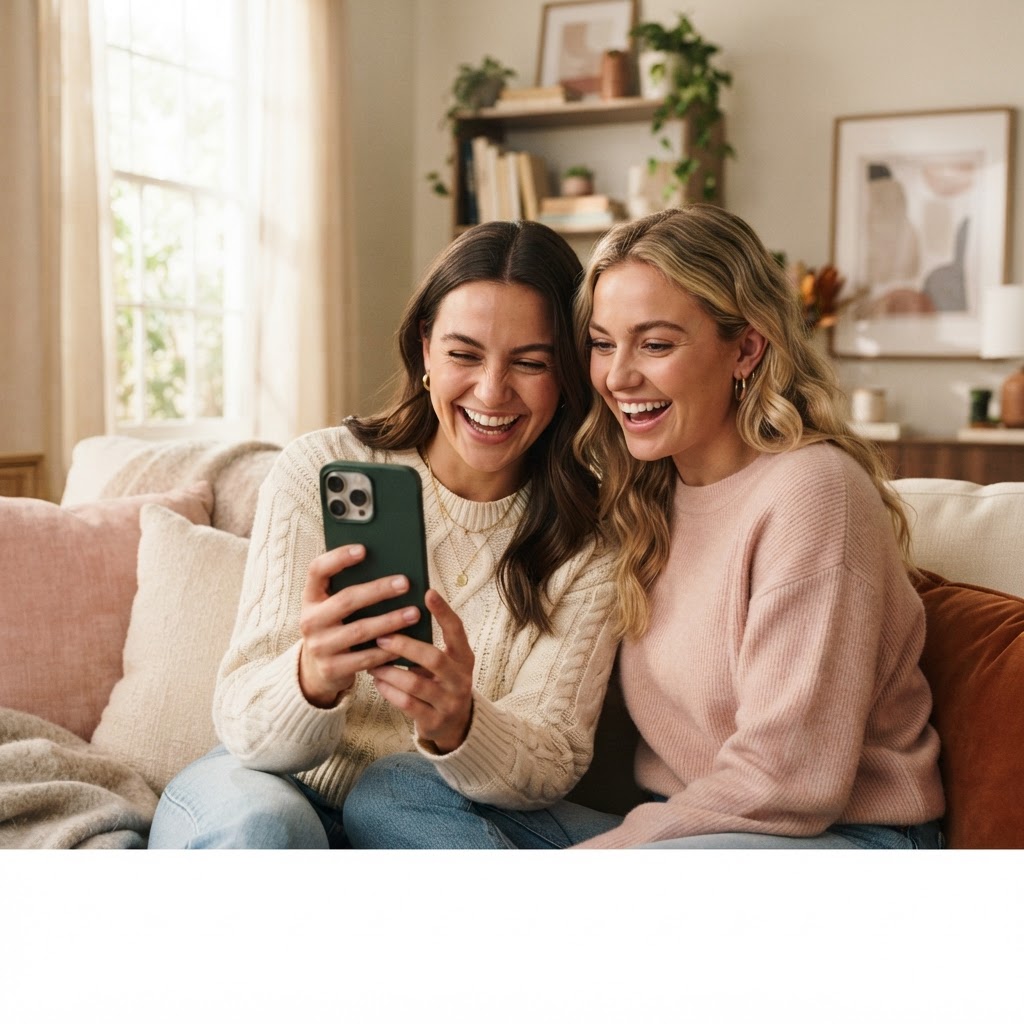 "You have to see this" — the moment social proof turns into a shopping decision.
Trigger #2: FOMO — The Ticking Clock of "Everyone Has One"
The fear of missing out is arguably the most powerful accelerant in modern shopping psychology. It's not just about missing a deal — it's about missing a moment.
TikTok trends have a natural life cycle, and everyone senses it. A sound, a product, an aesthetic rises, peaks, and eventually becomes "so last month." That built-in expiration date creates a subtle deadline: if I don't get this now, I'll miss the window where having it means something.
Three forces feed the FOMO engine:
- Limited stock signals: "Only 3 left" converts browsers at a startling rate, because losing the option to buy feels worse than the money spent.
- Algorithm surges: When the same product appears from five different creators in one afternoon, your brain concludes it's "everywhere" — whether or not it actually is.
- "Everyone has one" culture: Belonging is a deep human drive. A trending product isn't just an item; it's a membership card in a moment.
FOMO explains why viral products spike so fast: the trend itself becomes the reason to buy, layered on top of whatever the product actually does.
Trigger #3: Satisfying Visuals — The Science of "Oddly Satisfying"
Here's a trigger that has nothing to do with the product's usefulness and everything to do with your nervous system. Short-form video has unlocked a category of virality driven purely by sensory appeal.
 Impossible to look away from? That's the point.
Think about the videos that make it nearly impossible to look away:
- ASMR demonstrations: The crisp snap of a tumbler lid, the velvet sound of a knife through frozen slime, the soft click of a jewelry box.
- Oddly satisfying loops: A cutting board gliding across a spotless counter, honey dripping in one unbroken ribbon, a perfectly organized drawer clicking into place.
- Dramatic before-and-afters: The stained hoodie, the transformation, the reveal. Resolution is one of the most satisfying feelings the brain can experience.
Researchers studying these "oddly satisfying" videos believe they activate the same reward circuitry as completing a task — your brain gets the feeling of closure without doing any work. When a product is the star of that loop, your emotional association with the product becomes positive before you know a single fact about it. You're not evaluating the product. You're enjoying it. That's a completely different mental door — and it swings open much faster.
 Satisfying, gift-worthy finds like this sterling silver Mom Heart Necklace are made for the "oddly satisfying" treatment on camera.
Trigger #4: Emotional Resonance — "I Didn't Know I Needed This"
Perhaps the most reliable viral formula of all is relatability. The most shared product videos are rarely about the product. They're about a shared everyday struggle — and the product just happens to be the punchline or the solution.
The winning emotional recipes are remarkably consistent:
- Humor: "My dishwasher loading technique vs. my husband's" energy — the product is a prop in a joke you recognize from your own life.
- Nostalgia: Products that recreate a childhood treat, a grandma's recipe, or a 90s aesthetic hitch a ride on feelings that already exist.
- Recognition: The caption "I didn't know I needed this" works because it's true — you genuinely didn't. The video reframes a problem you had stopped noticing as suddenly solvable.
Psychologists point out that we share things that express identity. Sending a relatable product video to a friend says something about you: yes, this is my life, and yes, I found it funny. Every share is a small act of self-expression — which means relatable content gets distributed by its audience for free. That's the true engine of virality.
 Emotional resonance in action: a keepsake journal that turns everyday nostalgia into a gift people love to share.
Trigger #5: The Creator Trust Factor — Why UGC Beats Celebrities
The final trigger explains who delivers the message. A decade ago, the fastest route to a hit product was a celebrity endorsement. Today, the data tells a different story: authentic, unpolished user-generated content (UGC) consistently outperforms glossy celebrity campaigns.
The psychology comes down to three trust signals:
- Imperfection signals honesty: Bad lighting, a messy counter, and a genuine first reaction read as evidence that nobody was paid. Polish is suspicious; authenticity is persuasive.
- Similarity beats status: You don't ask "is this celebrity like me?" — you ask "is this person like me?" A creator with your same hair type, kitchen, or toddler chaos answers with an automatic yes.
- Skin in the game: A random person filming their honest opinion has nothing to gain. Your brain prices that credibility far above a paid spokesperson reading a script.
This is also why brands now study creators instead of trying to become one. The most effective voice for a product is someone who bought it, used it, and filmed it on a Tuesday because they felt like it.
Putting It All Together: The Anatomy of a Viral Product
Zoom out and you can see how the five triggers compound on each other. A relatable creator films a satisfying demonstration of a genuinely useful product. Social proof piles up in the comments. FOMO builds as the algorithm spreads it to millions. Each trigger makes the next one stronger — a psychological flywheel that turns good products into cultural moments.
And here's the part worth remembering: none of it works for long on a bad product. The internet's collective review system is brutally efficient. Trends built on hype alone collapse as fast as they rise. The products that endure — the ones still selling months later — are the ones that were actually worth the hype in the first place.
From Viral Hype to Worth Trying
If you've read this far, you now understand something most shoppers never consciously think about: that tug you feel when a product keeps appearing on your feed isn't random — it's five well-documented psychological triggers doing exactly what they evolved to do.
So how do you use that knowledge without falling for every trend? Here's our honest advice: let virality be a signal, not a verdict. A trending product deserves a look — the crowd has done some of the vetting for you. But the real question is always whether it fits your life, your routines, or the person you're shopping for.
That's exactly the idea behind our Viral Finds collection at CheerfulFinds. It's our thoughtful filter for the noise: trending products, social-media-inspired favorites, and popular gift ideas — gathered in one place so you can discover what's getting attention right now without scrolling through the entire internet to find it. If something earned its moment in the feed and also makes a genuinely great gift or everyday find, that's where it lives.
 From our Viral Finds collection: the Love Story Book Necklace, one of the pieces currently catching eyes.
Because the best part of understanding viral psychology isn't resisting trends — it's enjoying them on purpose. Take a look, see what catches your eye, and decide for yourself which ones are worth the hype. 🔥


